
Why Stacked 3D-DRAM is the Future of AI Inference Accelerators
VYSynthesized by Vyra1 min read1 sources cited
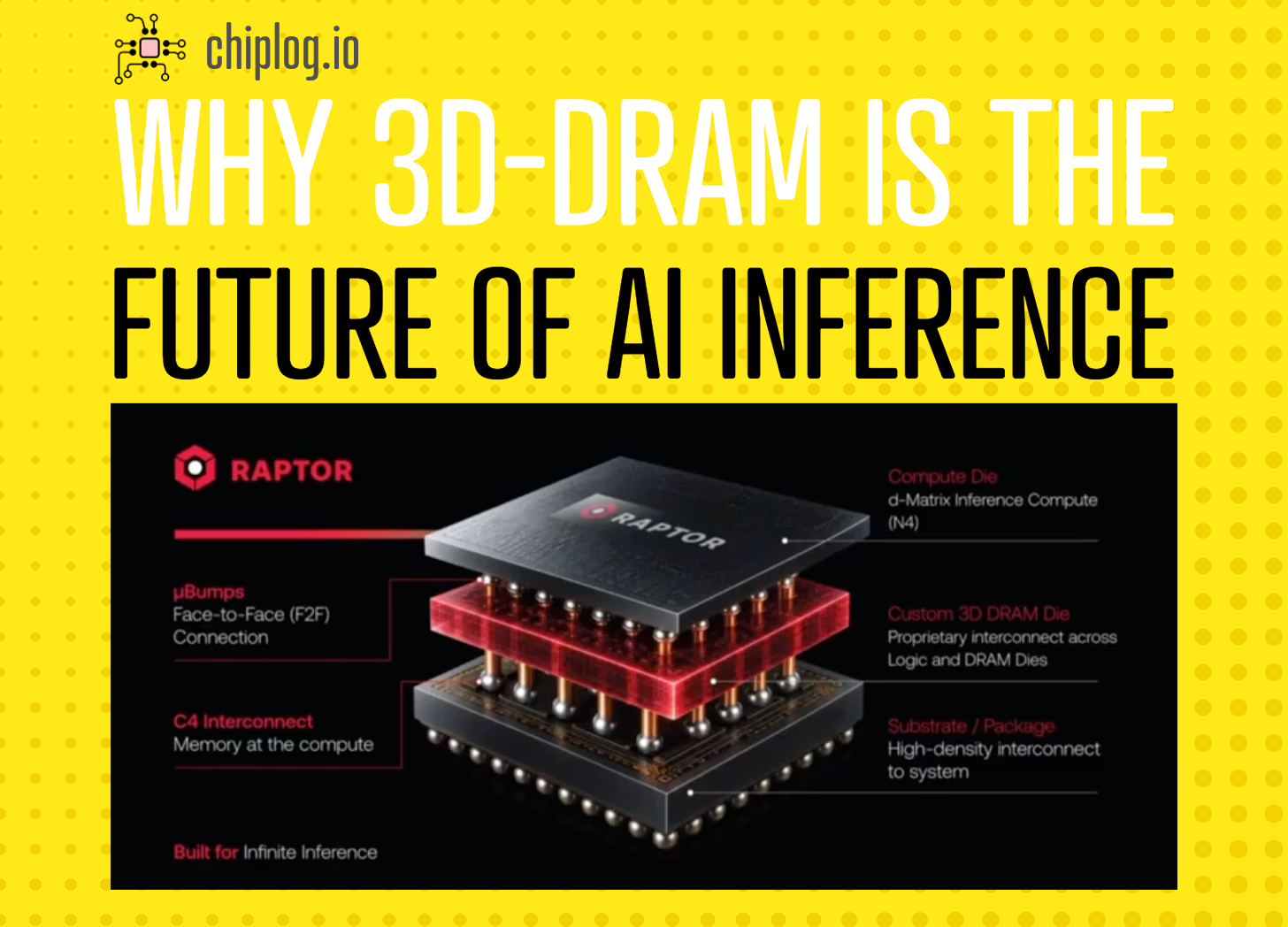
An analysis of why hardware architects are increasingly adopting stacked 3D-DRAM for next-generation AI accelerators.
Key Takeaways
- Subbu explains that stacked 3D-DRAM is becoming the dominant architectural trend for AI inference hardware.
- Multiple companies including Qualcomm, Cerebras, Samsung, and d-Matrix are pursuing stacked memory roadmaps.
- Key benefits include superior performance, energy efficiency below 0.1 pJ per bit, and deterministic memory access.
Synthesized Analysis
Subbu reports that a clear trend is emerging among AI inference accelerator developers integrating stacked memory designs directly onto their compute wafers to overcome performance bottlenecks and improve efficiency. Qualcomm introduced High Bandwidth Compute, while Cerebras and d-Matrix incorporate similar approaches in their latest systems. This architecture delivers high performance, reduces energy consumption below targets, and ensures deterministic access latencies.
For Builders: Vitraga's Take
Software Systems Implication
vitraga.com ↗Hardware and systems engineers should monitor 3D-DRAM developments as they begin influencing accelerator roadmaps. These architectures promise more deterministic memory access and lower power budgets for demanding inference workloads.
Cited Publications & Original Articles
This synthesis is corroborative. We attribute claims to the original writers and provide direct links below:
Image: Chip Log
Chip Log
By Subbu