
Vyra
LIVE WIRE·Exactly 60 words, checked before publication
ALL NEWS
|
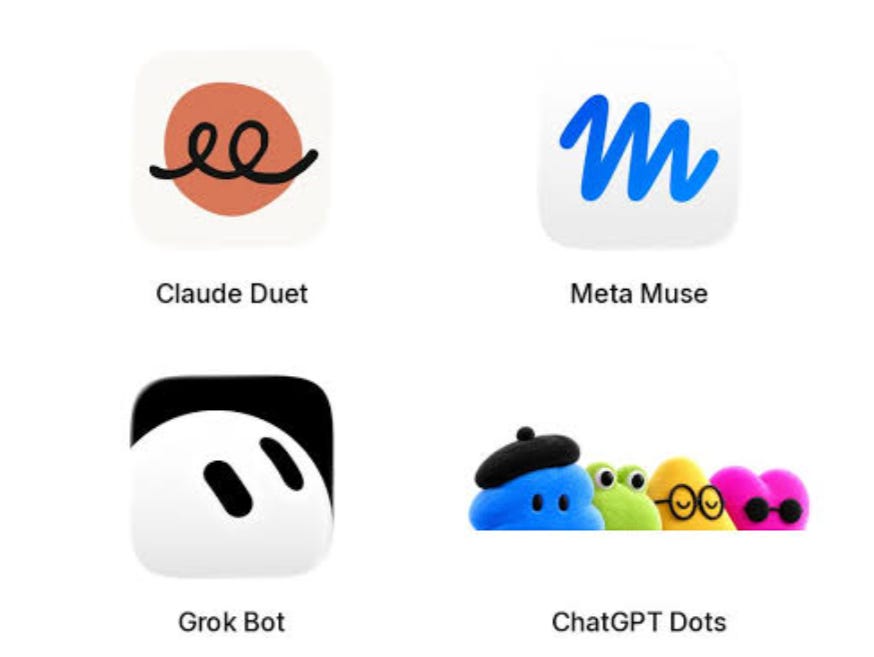
Creator Economy Offers Promotional Codes For Claude Max And Grok Bot
TOOLS
1 / 37
Creator Economy·Nov 20
~18s read
Creator Economy·Nov 20

Creator Economy Offers Promotional Codes For Claude Max And Grok Bot

Peter Yang reports in Creator Economy an early Black Friday promotion for subscribers. Paid members receive access to promotional codes valued at two hundred dollars. These codes provide free months of Claude Max and Grok Bot. Supplies are extremely limited with only fifty codes available total. The offer is strictly restricted to new customers who never purchased either tool previously.

60W Verified
~18s read

Maintaining Knowledge Freshness in AI Second Brain Systems
TOOLS
2 / 37
The AI Corner·Nov 20
~18s read
The AI Corner·Nov 20

Maintaining Knowledge Freshness in AI Second Brain Systems

Ruben Dominguez reports that building an internal artificial intelligence knowledge system takes minimal effort initially. However, maintaining accuracy proves difficult over time. Outdated documents cause models to confidently provide incorrect pricing details. Teams must carefully manage storage and governance. Furthermore, industry leaders are currently gathering at upcoming events to discuss effective strategies for combining human labor with automated agent workflows.

60W Verified
~18s read
Engineering Enterprise AI Agents and Evaluation Pipelines
TOOLS
3 / 37
ByteByteGo·Nov 20
~18s read
ByteByteGo·Nov 20

Engineering Enterprise AI Agents and Evaluation Pipelines

ByteByteGo explores the complex challenges of bringing autonomous AI agents into enterprise production environments. Deploying these systems requires careful management regarding data freshness and security boundaries. According to Vishal Mehra at GlobalFoundries, semiconductor manufacturers are successfully integrating agentic workflows using robust infrastructure. Furthermore, expert Hamel Husain notes that establishing reliable evaluation pipelines remains a critical hurdle for modern software teams.

60W Verified
~18s read
Software Factories and Code Reviews with Harjot Gill
AGENTS
4 / 37
The Pragmatic Engineer·Nov 20
~18s read
The Pragmatic Engineer·Nov 20

Software Factories and Code Reviews with Harjot Gill

Gergely Orosz interviews Harjot Gill on The Pragmatic Engineer Podcast to discuss software factories and code reviews. Gill reports shipping over five thousand pull requests last month. He maintains an artificial intelligence spending run rate of two hundred fifty thousand dollars monthly. This approach contradicts growing industry concerns that artificial intelligence costs are excessive and must be clamped down urgently.

60W Verified
~18s read

Anthropic Reaches Public Markets Amid Big Tech Industry Shifting Dynamics
POLICY
5 / 37
The Pragmatic Engineer·Nov 20
~18s read
The Pragmatic Engineer·Nov 20

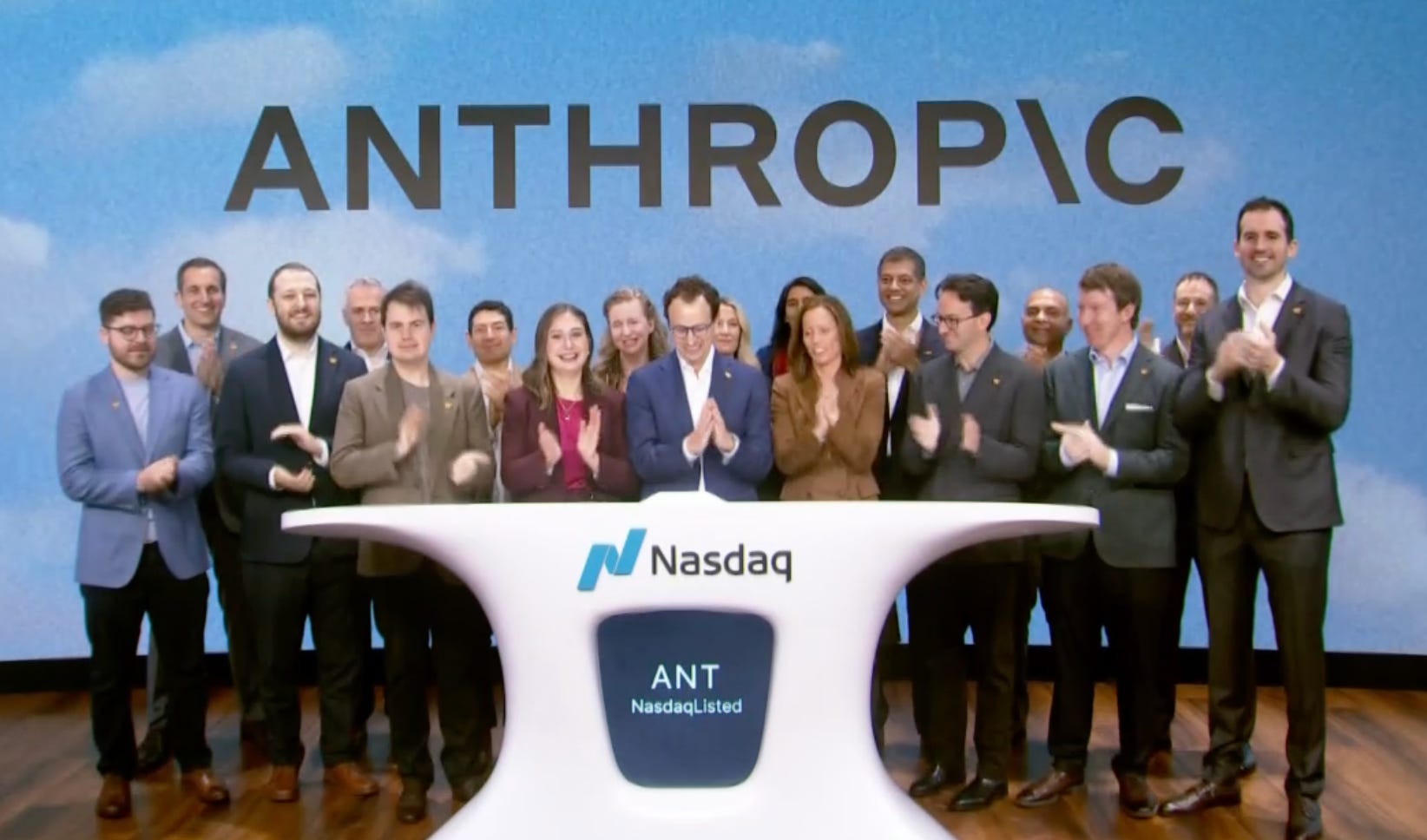
Anthropic Reaches Public Markets Amid Big Tech Industry Shifting Dynamics

The Pragmatic Engineer newsletter author Gergely Orosz explores current trends shaping modern software engineering organizations. His latest pulse update highlights that frontier laboratory Anthropic completed the largest ever initial public offering recorded in the technology sector. This monumental financial event happens alongside other notable cultural discussions regarding artificial intelligence adoption impacting traditional corporate writing practices across major technology companies today.

60W Verified
~18s read
Anthropic Targets Trillion-Dollar Valuation Amid Regulatory Headwinds
FUNDING
6 / 37
Understanding AI·Nov 20
~18s read
Understanding AI·Nov 20

Anthropic Targets Trillion-Dollar Valuation Amid Regulatory Headwinds

Understanding AI writer Kai Williams reports that Anthropic is scheduled to go public soon with a valuation exceeding one trillion dollars. OpenAI is also expected to follow suit shortly. Despite historic revenue growth over recent months, significant challenges remain ahead. Newly elected Democratic majorities in Congress plan to prioritize strict artificial intelligence regulation targeting power hungry data centers starting January.

60W Verified
~18s read

Evaluating Personal AI Agents: Grok Bot Versus Dots
AGENTS
7 / 37
AI Supremacy·Nov 20
~18s read
AI Supremacy·Nov 20

Evaluating Personal AI Agents: Grok Bot Versus Dots

Michael Spencer explores the current landscape of personal artificial intelligence assistants in his latest article on AI Supremacy. He compares Grok Bot and Dots amidst a backdrop of major industry events. These events include Nvidia earnings reports, Anthropic market moves, and rising concerns regarding autonomous security threats announced by Google. The piece focuses on practical applied guidance for users everywhere.

60W Verified
~18s read

Anthropic Sets Record With Massive Two Trillion Dollar Valuation IPO
FUNDING
8 / 37
Big Technology·Nov 20
~18s read
Big Technology·Nov 20

Anthropic Sets Record With Massive Two Trillion Dollar Valuation IPO

Alex Kantrowitz reports that Anthropic raised eighty one billion dollars during its historic initial public offering on Thursday selling shares at eighty three dollars apiece with a two trillion dollar valuation firmly in sight as shares popped thirty percent at the opening according to Jonathan Weber noting this easily surpassed SpaceX while Michael Spencer highlights their rapid rise from inception.

60W Verified
~18s read

Evaluating Anthropomorphism in Modern Artificial Intelligence Interfaces
MODELS
9 / 37
Ben's Bites·Nov 20
~18s read
Ben's Bites·Nov 20

Evaluating Anthropomorphism in Modern Artificial Intelligence Interfaces

Ben Bites explores how users increasingly perceive conversational artificial intelligence systems as actual people. The publication notes that individuals have attempted to anthropomorphize machines for centuries. This behavior highlights the profound psychological impact of fluid natural language processing interfaces. As software engineers deploy more sophisticated chatbots, managing user expectations remains a critical design challenge across the entire technology ecosystem today.

60W Verified
~18s read

Principles Behind Building Successful New Computer Architectures
CHIPS
10 / 37
Chip Insights·Nov 20
~18s read
Chip Insights·Nov 20

Principles Behind Building Successful New Computer Architectures

Bharath Suresh explores how Nvidia succeeded by studying computer architecture history. He argues that founding a new hardware paradigm requires careful domain selection. Developers must identify fields where current systems struggle with speed or cost. Furthermore, engineers ought to find general workload patterns rather than relying on rigid, fixed-function accelerators. This ensures long-term scalability across evolving software industry demands successfully.

60W Verified
~18s read

Understanding On-Chip Networks and Data Movement Logistics
CHIPS
11 / 37
Chip Insights·Nov 20
~18s read
Chip Insights·Nov 20

Understanding On-Chip Networks and Data Movement Logistics

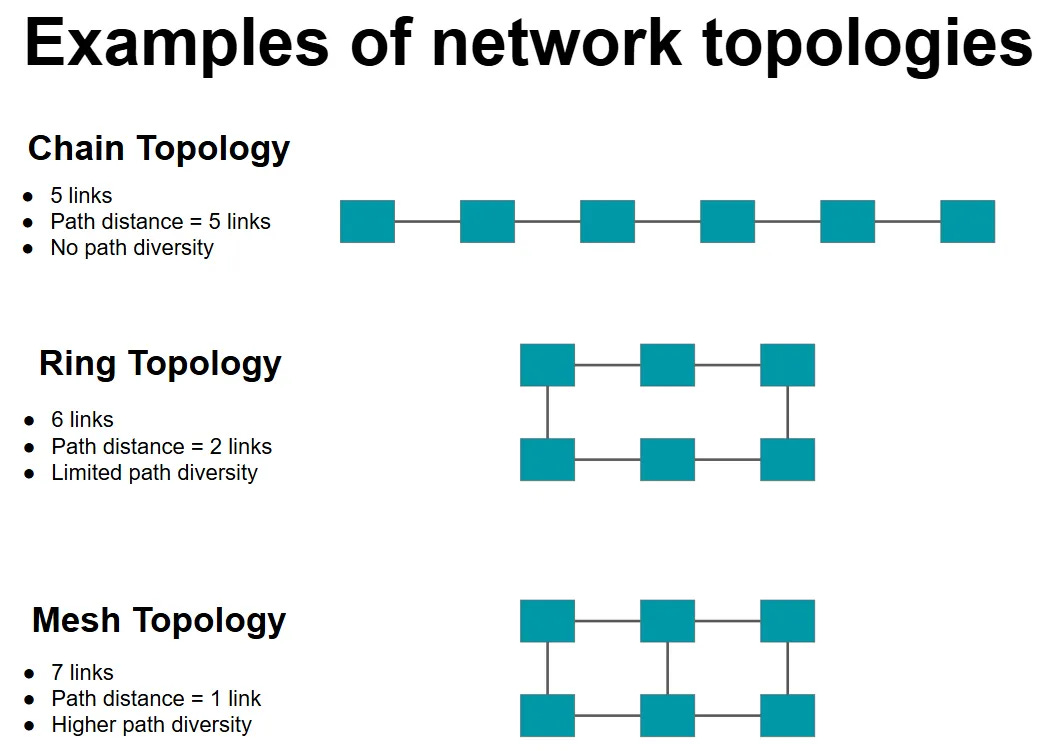
Bharath Suresh reports that chip architecture traditionally focuses on individual processors and memory components in isolation rather than their interactions with each other inside the hardware system today however moving data across nodes consumes significant energy and time resources making efficient networks vital for overall performance by comparing silicon routing challenges to commercial airline logistics engineers can better optimize topologies

60W Verified
~18s read
Evaluating Technical Writing in the Age of Generative AI
TOOLS
12 / 37
Chip Insights·Nov 20
~18s read
Chip Insights·Nov 20

Evaluating Technical Writing in the Age of Generative AI

Bharath Suresh writes on Chip Insights about how generative artificial intelligence challenges the future of technical newsletters. He argues that relying solely on human error rates is a losing battle against improving systems. Instead of viewing difficulty as noble, creators must recognize that machines excel at compressing information. When writing simply transfers data, artificial intelligence will easily outperform human speed.

60W Verified
~18s read
The Proliferation of Specialized AI Processors: Innovation or Marketing Noise?
CHIPS
13 / 37
Chip Insights·Nov 20
~18s read
Chip Insights·Nov 20

The Proliferation of Specialized AI Processors: Innovation or Marketing Noise?

Bharath Suresh observes that the semiconductor industry is currently flooded with a growing alphabet soup of specialized processing units. While GPUs dominated the initial AI boom, newer architectures like TPUs and NPUs now compete for dominance in inference. Suresh cautions that this trend mirrors the devaluation of process node naming conventions, suggesting marketing branding may overshadow substantive technological advancements today.

60W Verified
~18s read
Navigating the Essential Computer Architecture Calendar for Engineers
CHIPS
14 / 37
Chip Insights·Nov 20
~18s read
Chip Insights·Nov 20

Navigating the Essential Computer Architecture Calendar for Engineers

Bharath Suresh outlines how computer architecture professionals track annual trade shows to anticipate hardware trends. The year begins with CES in January where speculative AI accelerator announcements preview future algorithms. Following that ISSCC provides actual silicon measurements and power metrics. Finally GTC establishes the industry vocabulary and broad narrative for distributed computing over the subsequent twelve months of development. cycles.

60W Verified
~18s read
Mapping algorithms to custom silicon architectures
CHIPS
15 / 37
Chip Insights·Nov 20
~18s read
Chip Insights·Nov 20

Mapping algorithms to custom silicon architectures

Bharath Suresh writes about mapping algorithms to custom silicon in his newest technical series on accelerators. The author provides initial insights concerning hardware design while noting that these opinions remain strictly his own. Engineering teams must carefully evaluate such hardware approaches when optimizing heavy workloads. Understanding custom chips helps developers scale infrastructure efficiently across modern distributed compute environments moving forward.

60W Verified
~18s read
Bridging Software and Hardware with TinyXPU
CHIPS
16 / 37
Chip Insights·Nov 20
~18s read
Chip Insights·Nov 20

Bridging Software and Hardware with TinyXPU

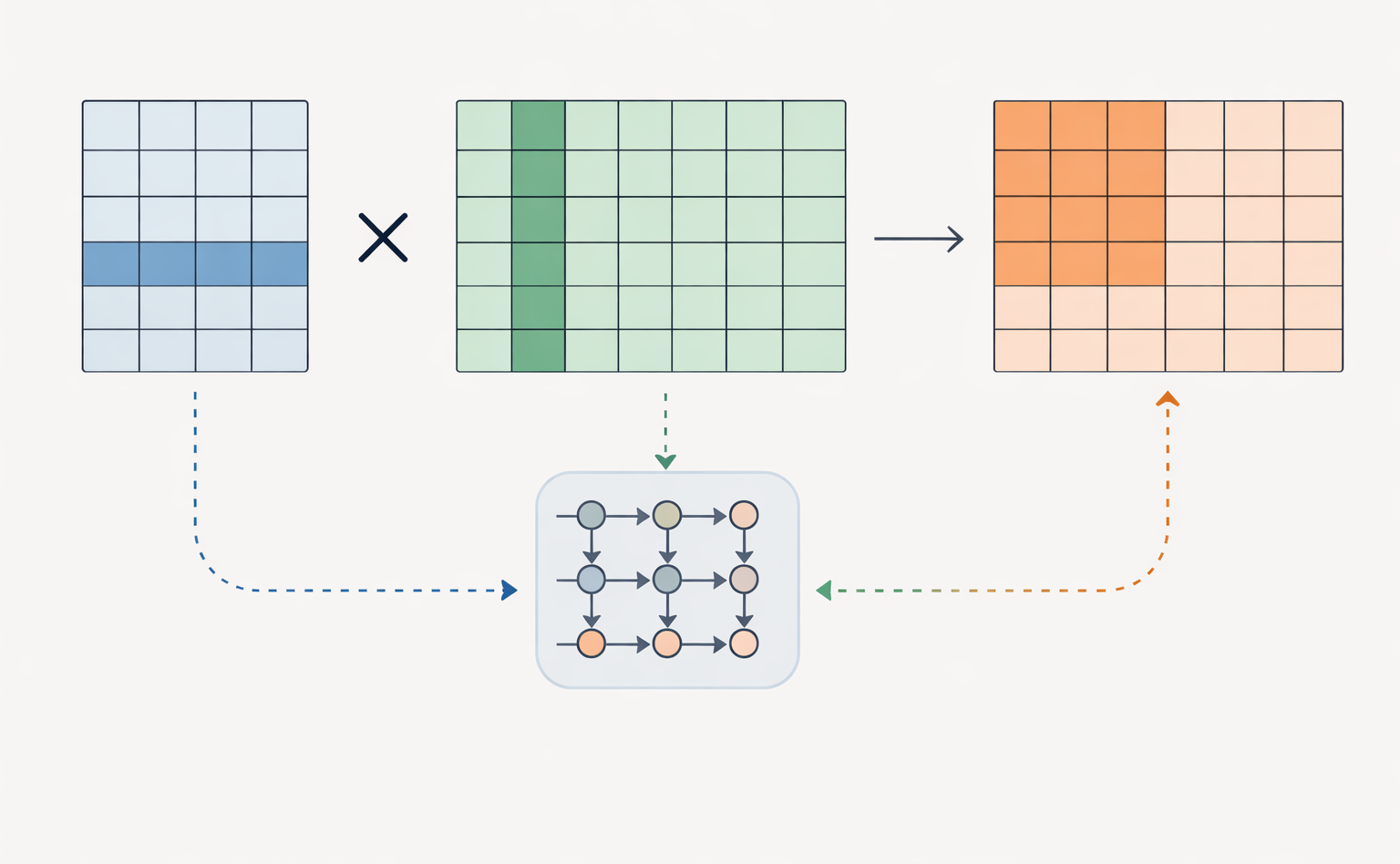
Bharath Suresh details the release of TinyXPU, an open source hardware accelerator designed to demonstrate how software interfaces can connect directly with custom silicon. According to Chip Insights, the project focuses primarily on matrix multiplication because the algorithm stresses both compute throughput and memory bandwidth. The initiative serves as a practical stepping stone for studying hardware and software co design.

60W Verified
~18s read
Architectural Analysis for Custom Silicon Accelerators
CHIPS
17 / 37
Chip Insights·Nov 20
~18s read
Chip Insights·Nov 20

Architectural Analysis for Custom Silicon Accelerators

Bharath Suresh reports that analyzing hardware architectures is a vital skill for modern engineers navigating custom silicon trends. Writing for Chip Insights, he introduces three key metrics which are utilization, throughput, and latency. These concepts help evaluate the TinyXPU project, a systolic array matrix multiplication accelerator. The series aims to bridge the gap between software developers and novel hardware designs.

60W Verified
~18s read
The Physical Constraints of Modern AI Infrastructure
CHIPS
18 / 37
Chip Insights·Nov 20
~18s read
Chip Insights·Nov 20

The Physical Constraints of Modern AI Infrastructure

Bharath Suresh argues that modern AI datacenter expansion mirrors the early challenges faced by ENIAC engineers. While we obsess over advanced chips and complex algorithms, the true bottlenecks remain fundamental physical realities. Power delivery, thermal management, and facility infrastructure dictate the longevity of these massive systems. History shows that computing shifts inevitably collide with environmental limits, forcing us to rethink.

60W Verified
~18s read

Chip Insights Launches Video Series on Semiconductor Trends
CHIPS
19 / 37
Chip Insights·Nov 20
~18s read
Chip Insights·Nov 20

Chip Insights Launches Video Series on Semiconductor Trends

Bharath Suresh reports launching a new experimental video series called Context Caching for Chip Insights publication readers worldwide today instead of just using traditional long form writing formats exclusively to cover complex semiconductor architecture trends and historical computer systems effectively every week he plans to filter relevant industry ideas while evicting obsolete concepts sharing these concise thoughts via accessible videos

60W Verified
~18s read
Evaluating PPA Metrics Across Chip Design Stages
CHIPS
20 / 37
Chip Insights·Nov 20
~18s read

Chip Insights·Nov 20

Evaluating PPA Metrics Across Chip Design Stages

Bharath Suresh reports on the microarchitectural design process for accelerators like TinyXPU. Chip engineers must evaluate power, performance, and area across four distinct stages. Pre-synthesis estimates rely on analytical models and designer intuition. Post-synthesis translates RTL into a gate-level netlist. Post-implementation adds physical layout routing details. Finally, post-tape-out provides ground truth measurements from real silicon where modifications are extremely costly.

60W Verified
~18s read
Demystifying Local LLM Inference Execution
CHIPS
21 / 37
Chip Insights·Nov 20
~18s read

Chip Insights·Nov 20

Demystifying Local LLM Inference Execution

Bharath Suresh explores the fundamental mechanics behind running local large language model inference on standard consumer hardware setups. Using a simple Python script communicating via Ollama with a qwen3 model, the analysis breaks down the interaction between host CPUs and discrete GPUs. System DRAM and dedicated VRAM manage memory demands while bypassing supply chain hype and marketing driven industry biases.

60W Verified
~18s read
The Lifecycle And Economics Of Datacenter GPUs
CHIPS
22 / 37
Chip Insights·Nov 20
~18s read
Chip Insights·Nov 20

The Lifecycle And Economics Of Datacenter GPUs

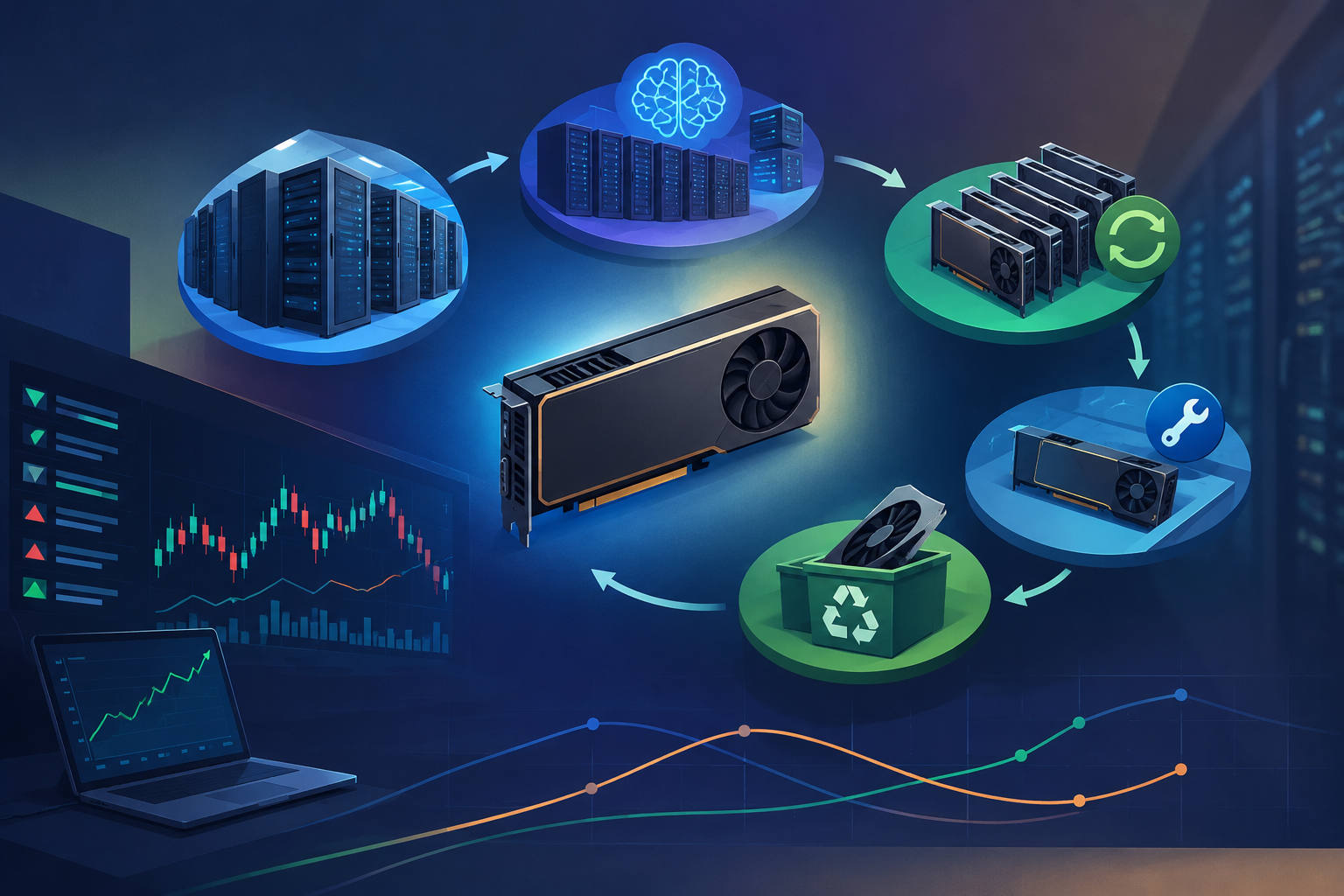
According to Bharath Suresh writing in Chip Insights, datacenter GPUs experience a long and complex economic lifecycle that extends far beyond their initial deployment. Carmen notes that when newer hardware launches, older chips do not become obsolete. Instead, they transition through different workloads, secondary markets, and geographies while continuing to generate significant value under evolving pricing models and market conditions.

60W Verified
~18s read
Demystifying DRAM Performance, Timing, and Architecture
CHIPS
23 / 37
Chip Log·Nov 20
~18s read
Chip Log·Nov 20

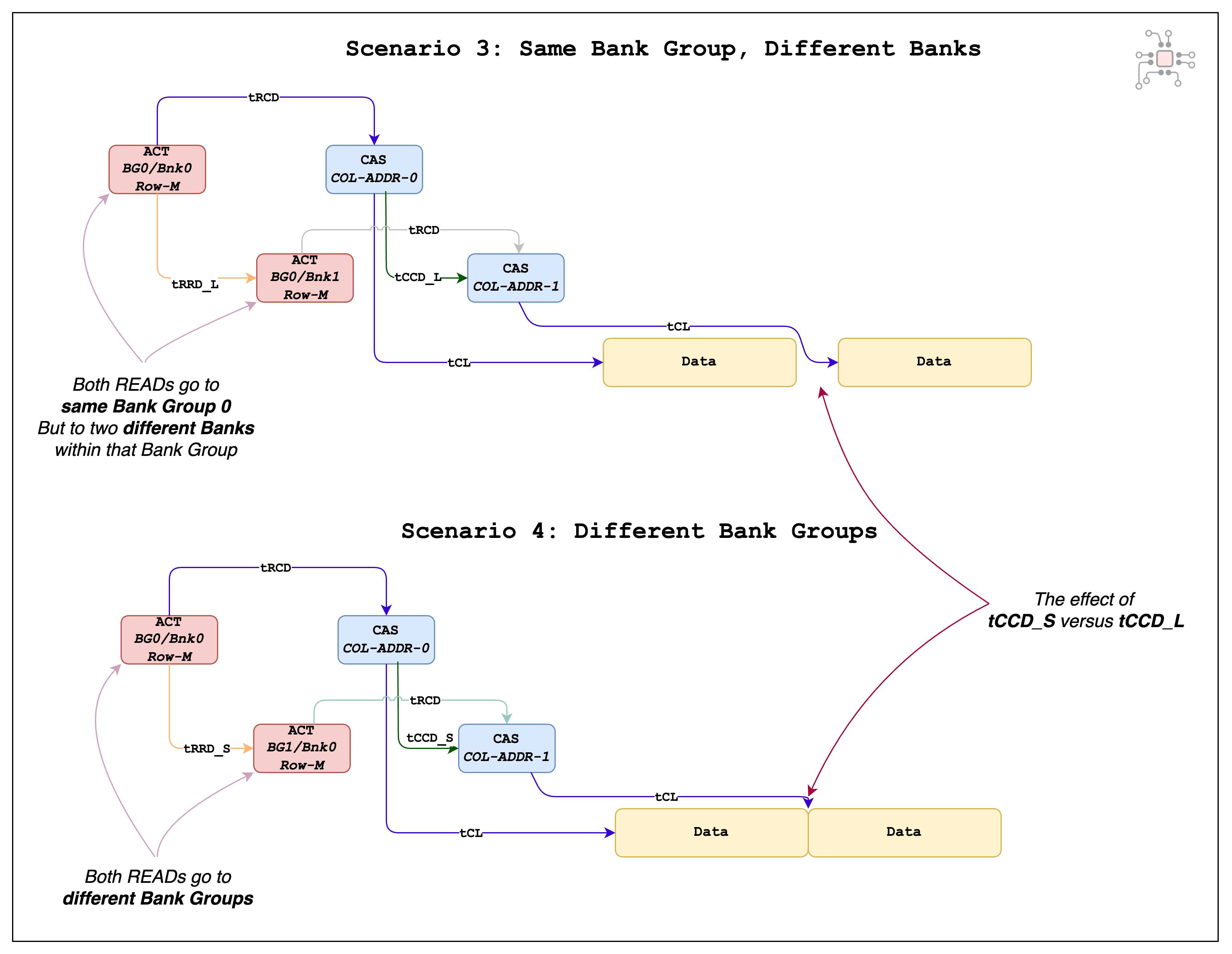
Demystifying DRAM Performance, Timing, and Architecture

According to Subbu writing in Chip Log, designing a robust memory subsystem requires mastering three key dimensions of DRAM. First, the physical structure dictates how data is stored across cells, banks, and dies. Second, timing parameters govern the rules for reading and writing data. Third, initialization and calibration handle environmental variations over time. Many modern workloads remain strictly memory bound.

60W Verified
~18s read
Evaluating DRAM and Compute Integration Topologies
CHIPS
24 / 37
Chip Log·Nov 20
~18s read
Chip Log·Nov 20

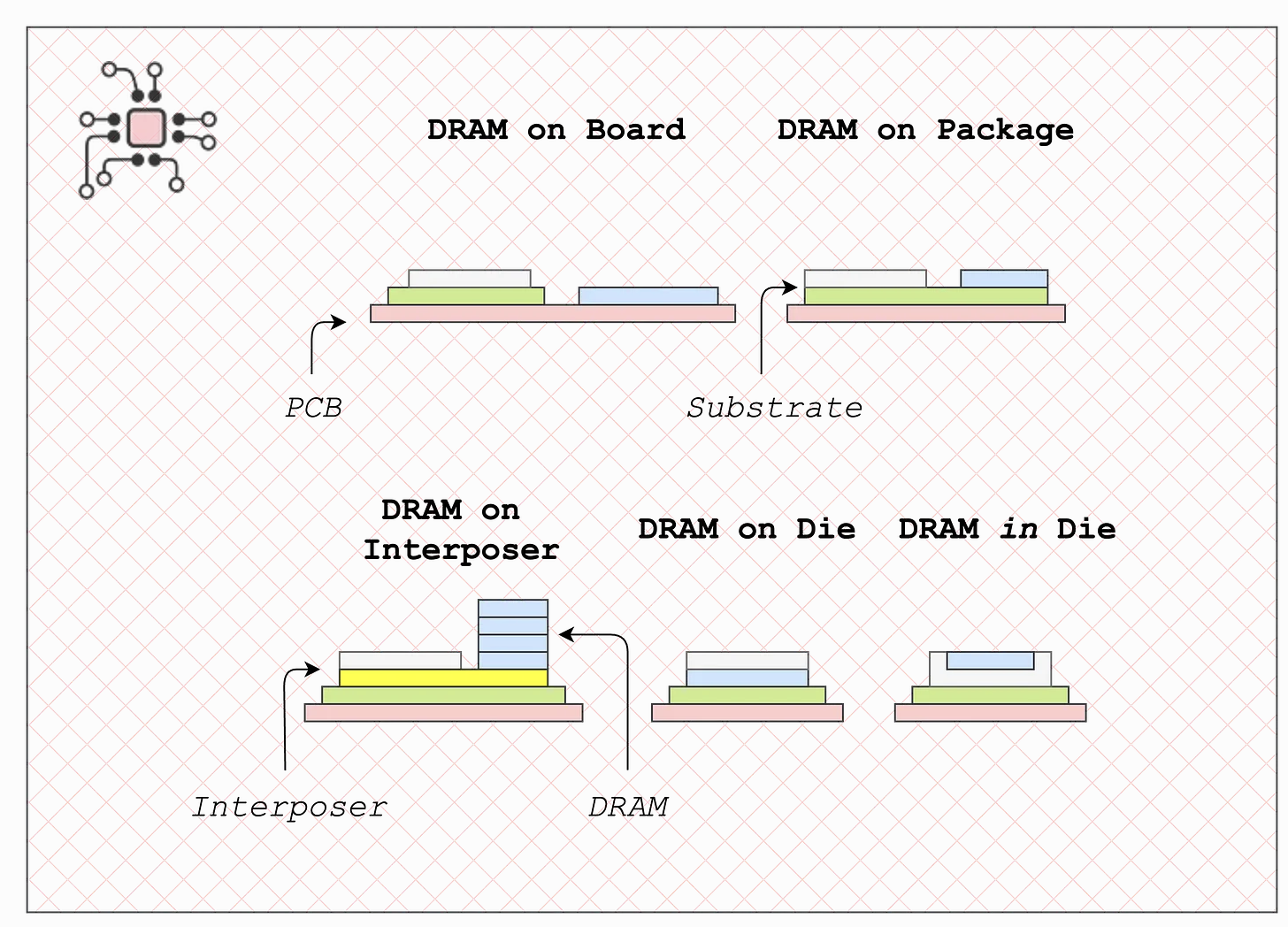
Evaluating DRAM and Compute Integration Topologies

Subbu explores five distinct architectural methods for integrating DRAM and compute silicon in Chip Log. The author categorizes memory placements based on physical proximity to the processor die. These topologies include memory soldered directly onto the board and advanced package configurations. Further designs utilize silicon interposers alongside emerging three dimensional stacking techniques. Engineers must evaluate these tradeoffs during hardware selection.

60W Verified
~18s read
Inside NVIDIA's Grace-Blackwell GB10 SoC and DGX Spark
CHIPS
25 / 37
Chip Log·Nov 20
~18s read
Chip Log·Nov 20

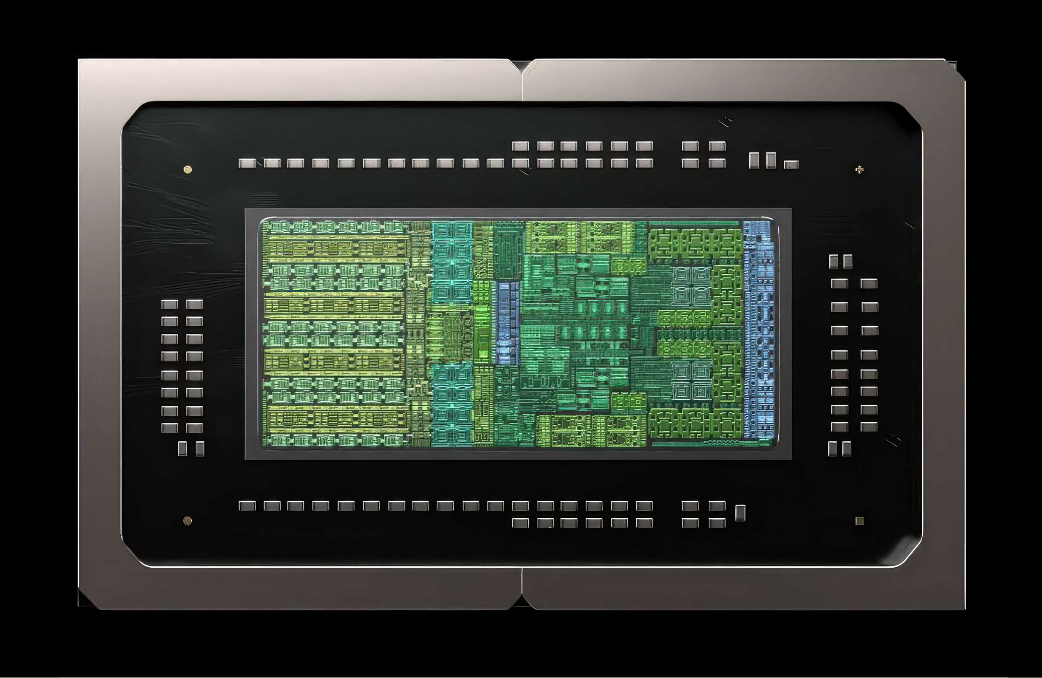
Inside NVIDIA's Grace-Blackwell GB10 SoC and DGX Spark

Subbu reports on the Grace-Blackwell GB10 SoC, the processor powering NVIDIA DGX Spark. Originally announced as Project DIGITS at CES in January, the hardware was renamed before shipping this October. According to Chief Architect Andi Skende, the chip was co-developed alongside MediaTek. Unlike larger configurations, the GB10 utilizes a 2.5D multi-die package. CPU and GPU dies connect via C2C interconnects.

60W Verified
~18s read
Nvidia Announces Vera Rubin Platform And Rubin CPX Inference Processor
CHIPS
26 / 37
Chip Log·Nov 20
~18s read
Chip Log·Nov 20

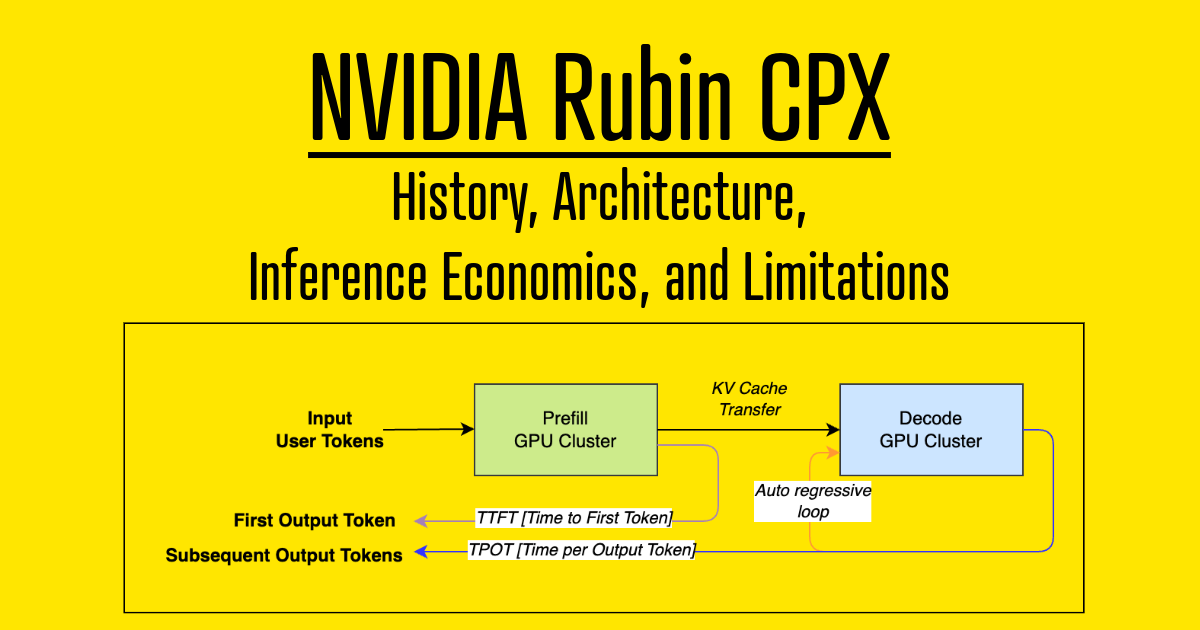
Nvidia Announces Vera Rubin Platform And Rubin CPX Inference Processor

Subbu reports that Nvidia is introducing the Vera Rubin platform as the successor to Grace Blackwell systems. This new hardware lineup includes a third processor called the Rubin CPX. By separating the prefill and decode stages of large language model inference, this architecture aims to reduce costs for providers. The framework Dynamo further supports disaggregated inference operations moving forward now.

60W Verified
~18s read
NVIDIA Announces Context Memory Storage Platform at CES 2026
CHIPS
27 / 37
Chip Log·Nov 20
~18s read
Chip Log·Nov 20

NVIDIA Announces Context Memory Storage Platform at CES 2026

At CES 2026, Subbu reports that NVIDIA announced the Context Memory Storage Platform to expand KV cache capacity beyond the GPU rack. While the hardware resembles existing Supermicro storage appliances using older BlueField-3 DPUs, NVIDIA has also partnered with WEKA to enhance software capabilities. This new appliance aims to address critical infrastructure bottlenecks facing modern large language model deployment pipelines.

60W Verified
~18s read
How Mellanox and NVIDIA built the modern AI data center
CHIPS
28 / 37
Chip Log·Nov 20
~18s read
Chip Log·Nov 20

How Mellanox and NVIDIA built the modern AI data center

According to Subbu writing in Chip Log, the partnership between NVIDIA and Mellanox transformed data centers by removing critical network bottlenecks. The collaboration progressed through five pivotal phases starting with GPUDirect Shared Memory in 2009. Subbu notes that subsequent milestones included GPUDirect RDMA and Storage innovations. Ultimately, these hardware advancements paved the way for today powerful AI factory architectures. Ever.

60W Verified
~18s read
Cisco Spin-Ins And The Rise Of Arista And Pensando
CHIPS
29 / 37
Chip Log·Nov 20
~18s read
Chip Log·Nov 20

Cisco Spin-Ins And The Rise Of Arista And Pensando

Chip Log author Subbu explores how Cisco utilized the spin-in model to retain elite engineering talent during the mid-2000s. By funding internal teams as independent startups with pre-arranged acquisition agreements, leadership attempted to combat corporate bureaucracy. However, this strategy created internal friction and ultimately fueled fierce competitors like Arista Networks alongside Pensando, which was acquired by AMD in recent years.

60W Verified
~18s read
Why Speculative Decoding Demands Specialized Silicon Architectures
CHIPS
30 / 37
Chip Log·Nov 20
~18s read
Chip Log·Nov 20

Why Speculative Decoding Demands Specialized Silicon Architectures

Chip Log author Subbu explores how large language model inference relies on two distinct phases known as prefill and decode. Because the decode loop is inherently serial, speculative decoding employs a smaller draft model alongside a larger target model. This architecture creates divergent compute requirements, suggesting that hardware optimized for low latency and high throughput must collaborate effectively in production.

60W Verified
~18s read
The Hardware Reality Gap: Deploying New GPUs
CHIPS
31 / 37
Chip Log·Nov 20
~18s read
Chip Log·Nov 20

The Hardware Reality Gap: Deploying New GPUs

Subbu reports on Chip Log that deploying new GPUs faces a twelve to eighteen month optimization gap before hyperscalers reach peak performance. Reliability remains a major concern across the entire industry. Engineers from Nvidia and Meta recently coauthored an IEEE paper addressing silent data corruption in AI infrastructure. This unprecedented collaboration highlights deep technical hurdles facing modern hardware deployment teams.

60W Verified
~18s read
Micron and SK Hynix Cross One Trillion Market Capitalization
CHIPS
32 / 37
Chip Log·Nov 20
~18s read
Chip Log·Nov 20

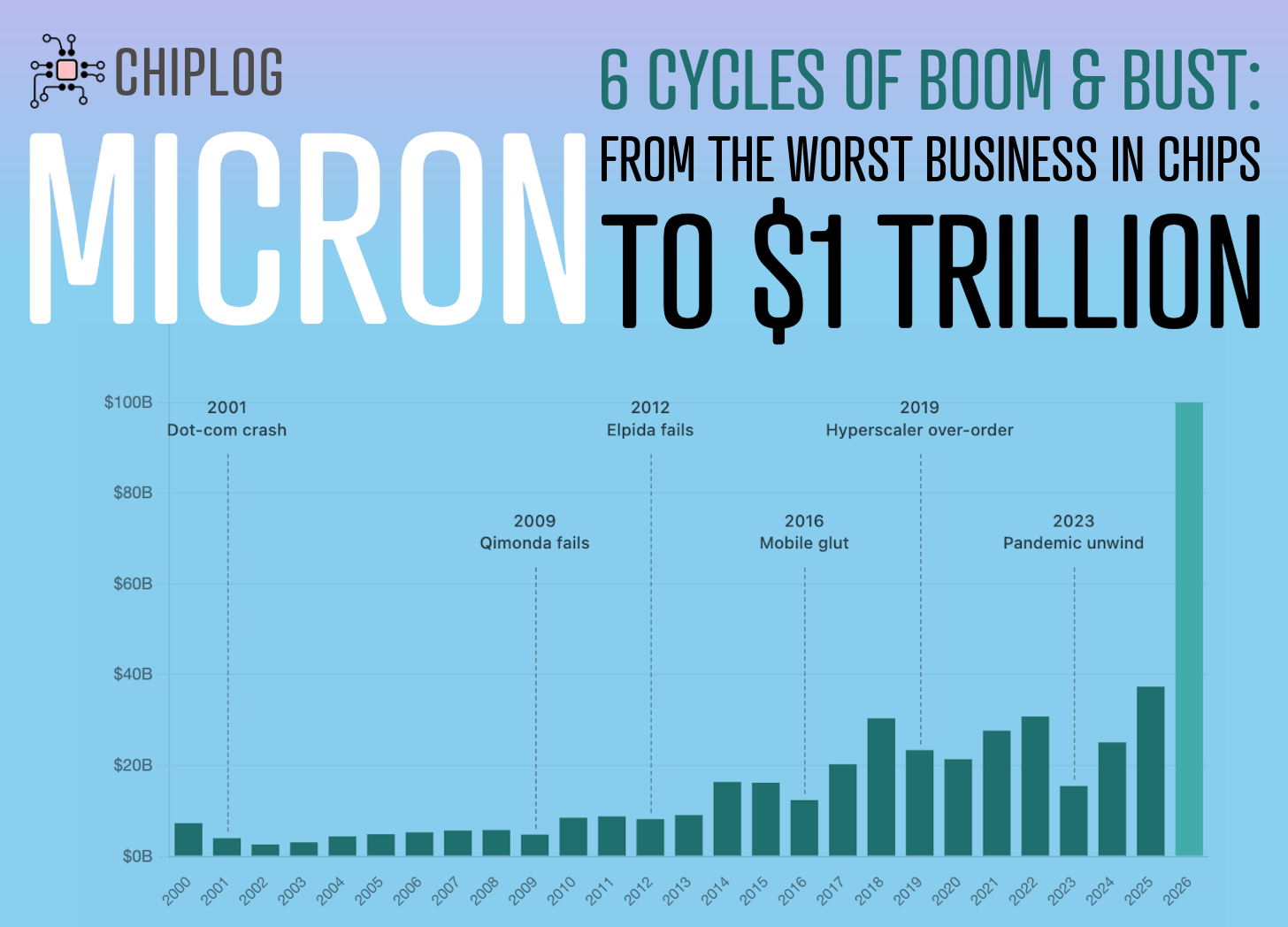
Micron and SK Hynix Cross One Trillion Market Capitalization

According to Subbu writing in Chip Log, memory giant Micron recently closed above a one trillion dollar market capitalization for the very first time. This historic surge followed an upgrade from financial analysts citing lucrative long term supply agreements. Meanwhile, SK Hynix crossed that same monumental threshold during the exact same week amid surging industry wide high bandwidth memory demand.

60W Verified
~18s read
Disaggregated LLM Inference Highlights SRAM Chips
CHIPS
33 / 37
Chip Log·Nov 20
~18s read
Chip Log·Nov 20

Disaggregated LLM Inference Highlights SRAM Chips

Chip Log author Subbu explores growing momentum behind disaggregated large language model inference and heterogeneous computing systems today. Recent industry partnerships pair standard graphics processing units with specialized silicon built around on-chip static random-access memory to boost performance. Attention-feed-forward disaggregation splits each layer so the bandwidth-heavy feed-forward components run on alternative accelerators like the Groq linear processing unit device instead.

60W Verified
~18s read
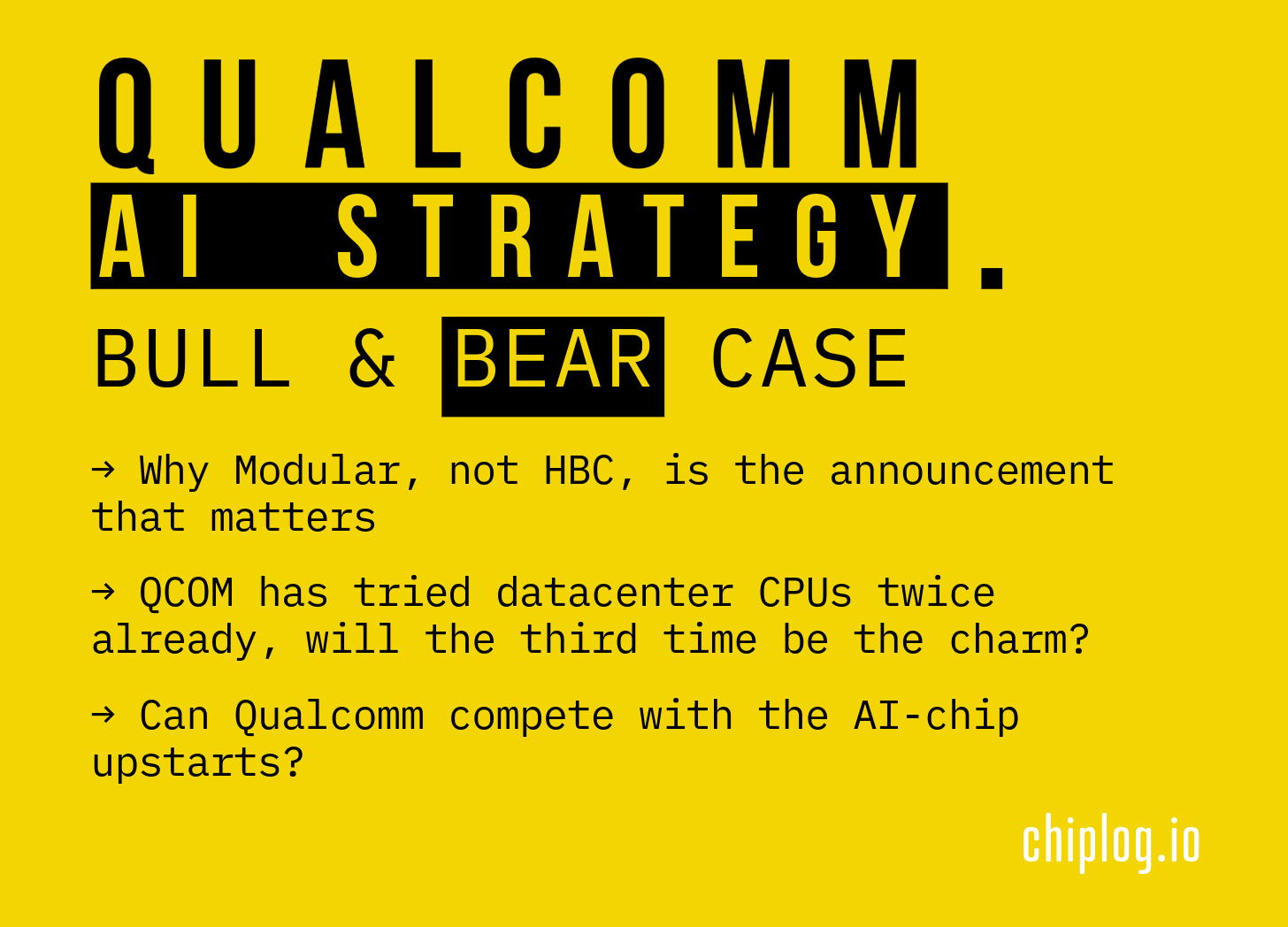
Qualcomm Pursues AI Infrastructure With Modular Acquisition
CHIPS
34 / 37
Chip Log·Nov 20
~18s read
Chip Log·Nov 20

Qualcomm Pursues AI Infrastructure With Modular Acquisition

Subbu reports that Qualcomm has unveiled an ambitious roadmap targeting the lucrative AI infrastructure market. According to Chip Log, the most pivotal move involves acquiring Modular for four billion dollars. This software deal addresses Nvidia moat by bolstering software capabilities. Concurrently, Qualcomm revealed High Bandwidth Compute hardware, though analysts question whether the company can meet its projected production timeline goals.

60W Verified
~18s read
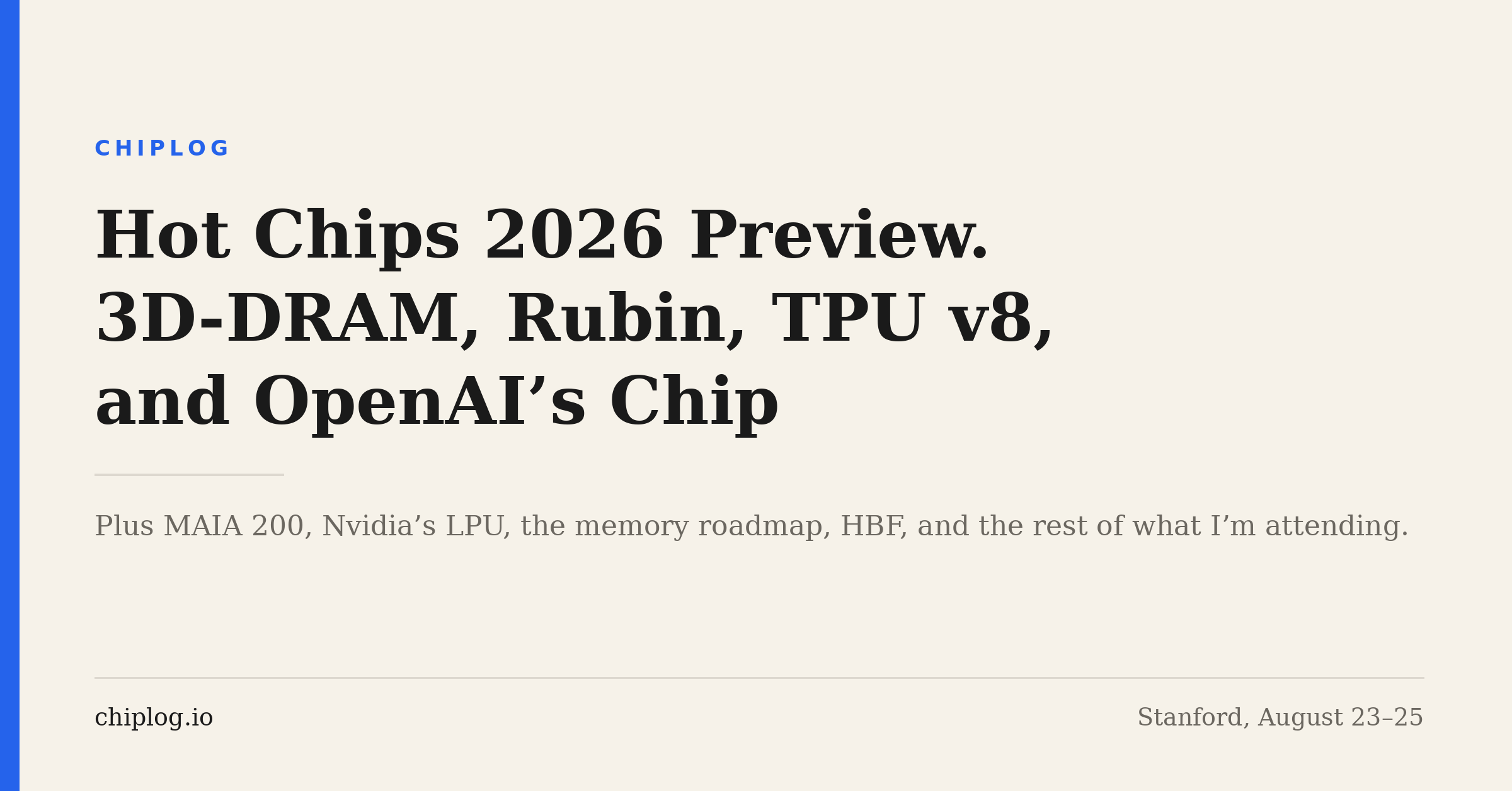
Hot Chips 2026 Previews Next-Gen AI Accelerators and 3D DRAM
CHIPS
35 / 37
Chip Log·Nov 20
~18s read
Chip Log·Nov 20

Hot Chips 2026 Previews Next-Gen AI Accelerators and 3D DRAM

Chip Log author Subbu previews the upcoming Hot Chips conference at Stanford University. He highlights his company d-Matrix presenting their newest Raptor accelerator alongside Meta in a memory tutorial. The session covers three-dimensional DRAM integration with tensor engines, memory bank architecture, and projected power metrics. Subbu promises further first-principle analysis articles soon. The broader event features numerous sessions on hardware.

60W Verified
~18s read
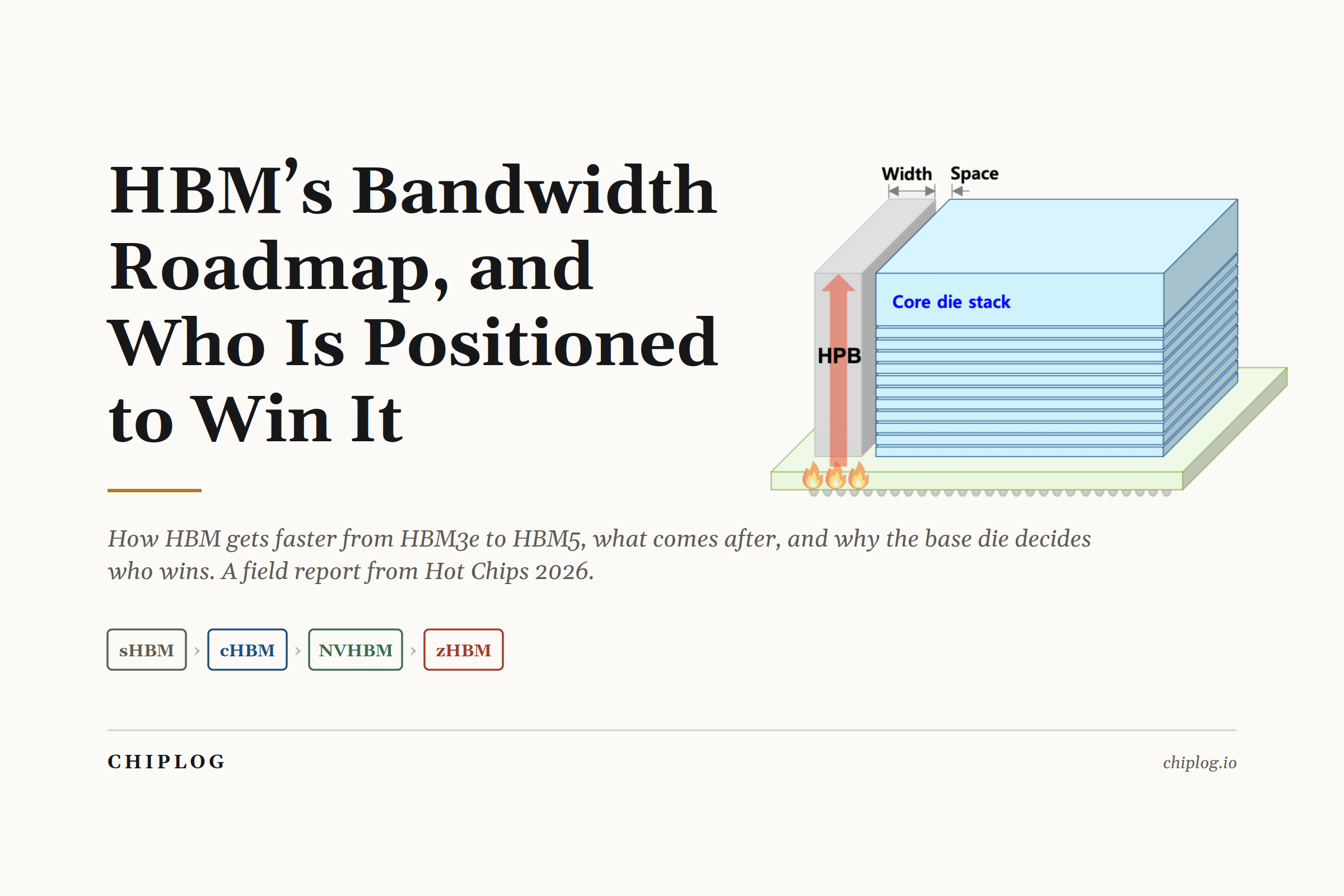
HBM4 Memory Roadmap Brings Massive Bandwidth and Architecture Costs
CHIPS
36 / 37
Chip Log·Nov 20
~18s read
Chip Log·Nov 20

HBM4 Memory Roadmap Brings Massive Bandwidth and Architecture Costs

Chip Log author Subbu details how memory manufacturers Samsung and SK Hynix plan to scale aggregate bandwidth up to twenty two terabytes per second for Rubin systems using HBM four technology with a doubled interface width of two thousand forty eight bits instead of the previous standard one thousand twenty four bits which creates serious die area penalties for accelerators.

60W Verified
~18s read
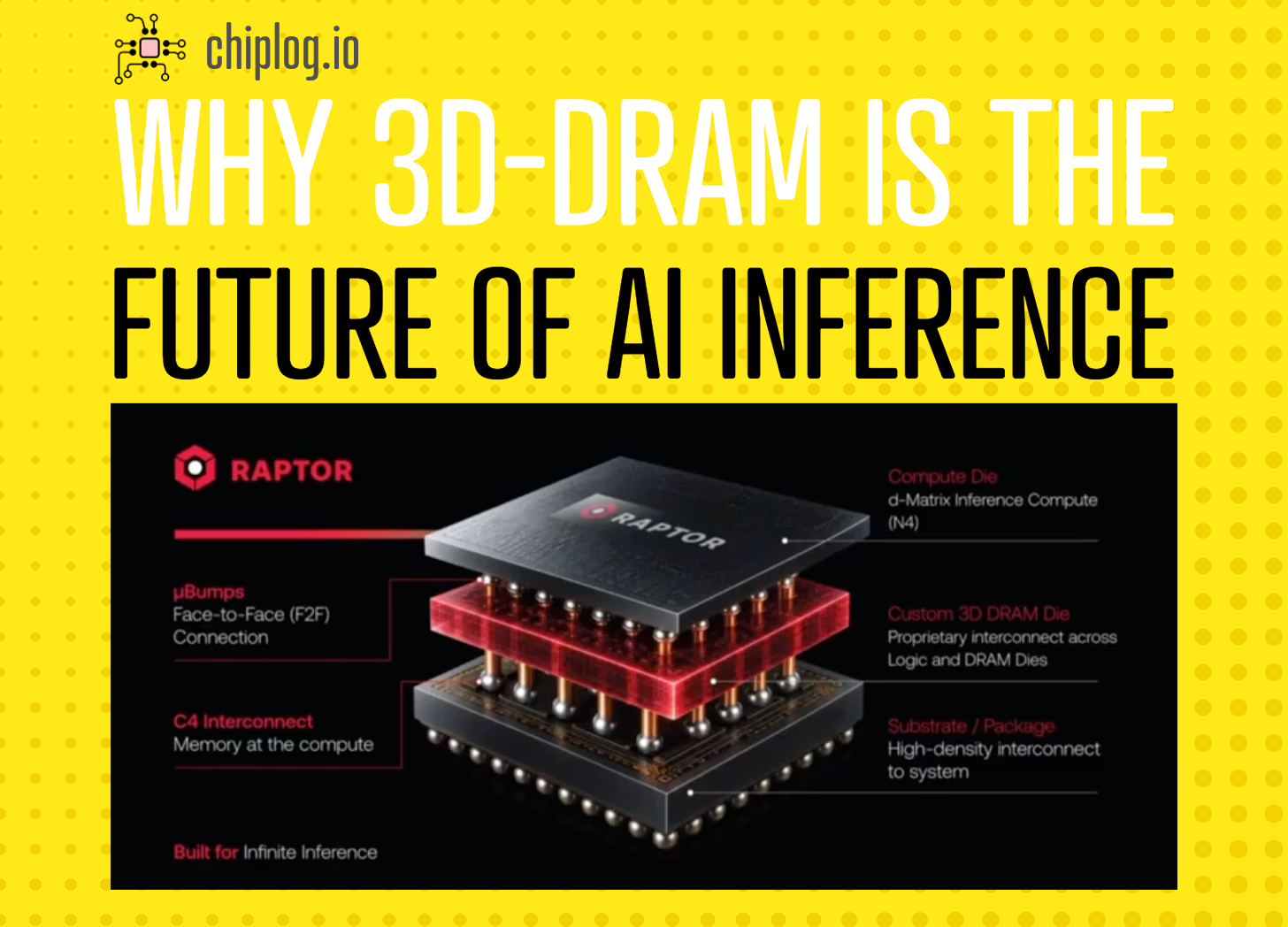
Why Stacked 3D-DRAM is the Future of AI Inference Accelerators
CHIPS
37 / 37
Chip Log·Nov 20
~18s read
Chip Log·Nov 20

Why Stacked 3D-DRAM is the Future of AI Inference Accelerators

Subbu reports that a clear trend is emerging among AI inference accelerator developers integrating stacked memory designs directly onto their compute wafers to overcome performance bottlenecks and improve efficiency. Qualcomm introduced High Bandwidth Compute, while Cerebras and d-Matrix incorporate similar approaches in their latest systems. This architecture delivers high performance, reduces energy consumption below targets, and ensures deterministic access latencies.

60W Verified
~18s read